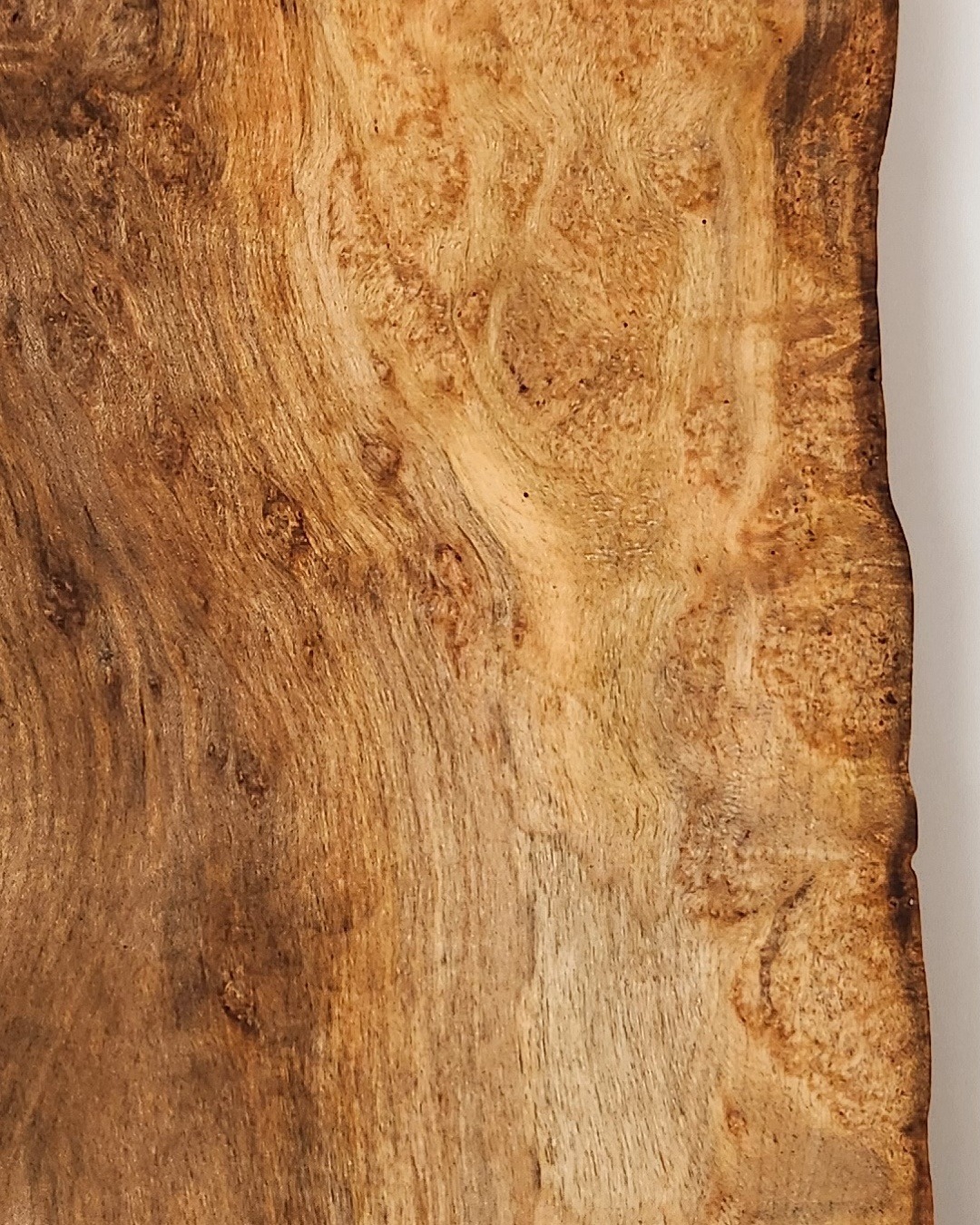
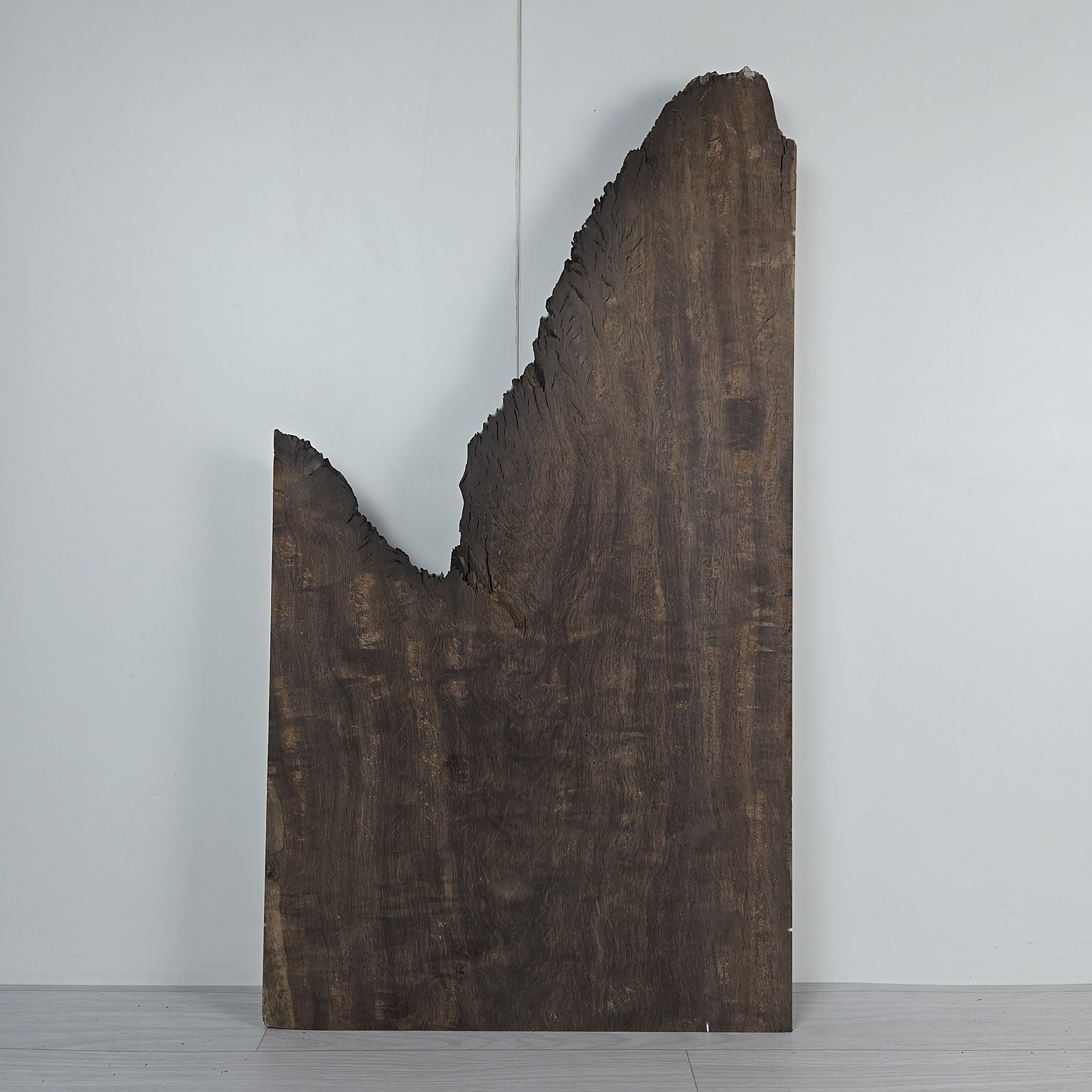
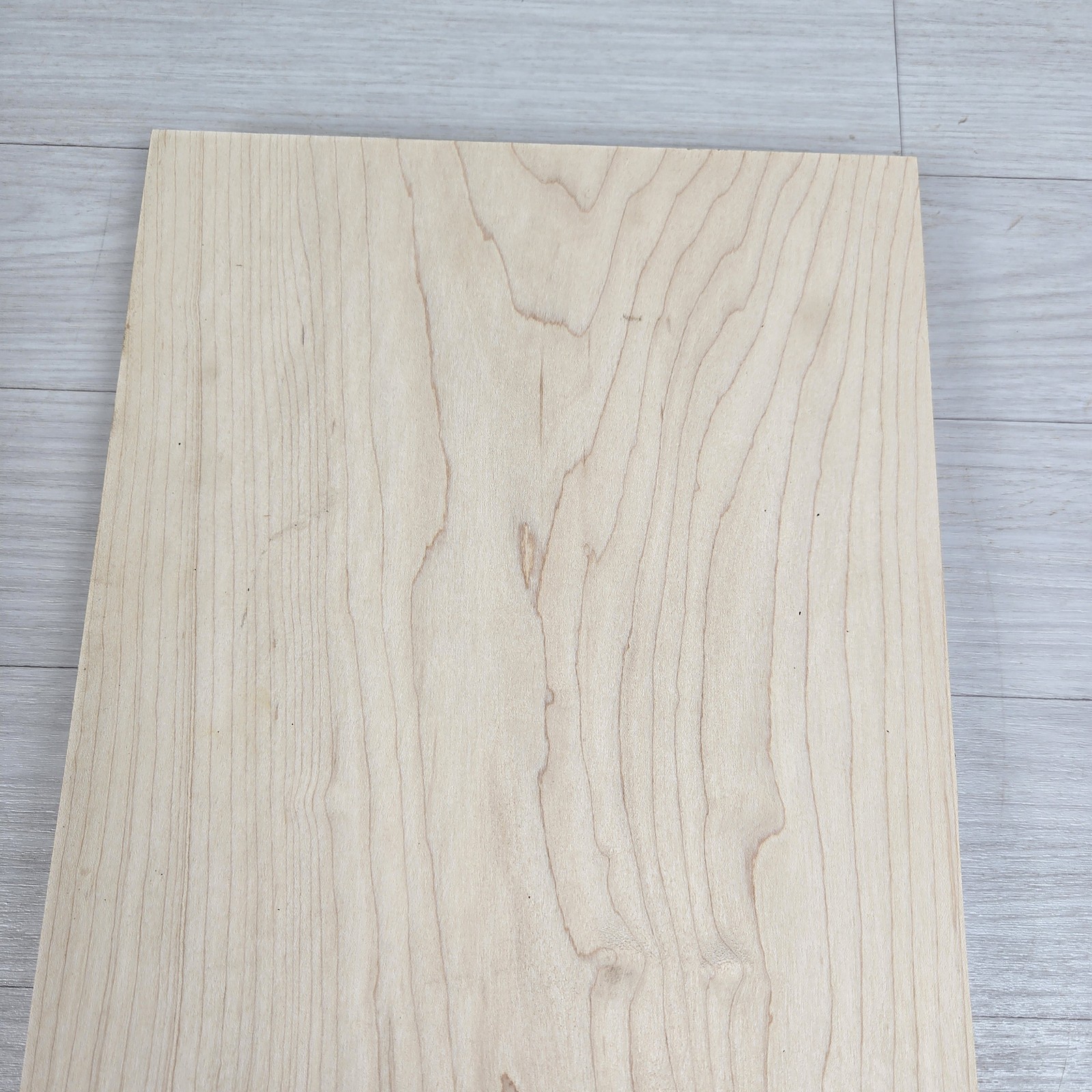
A wall-mounted shelf is one of the simplest kinds of furniture. It needs only a single board and hardware to hold it to the wall. With no legs or drawers, almost all you see is the board itself. The board’s shape and grain, size and thickness become the shelf’s entire face. That is why choosing comes before making when it comes to a wall shelf.
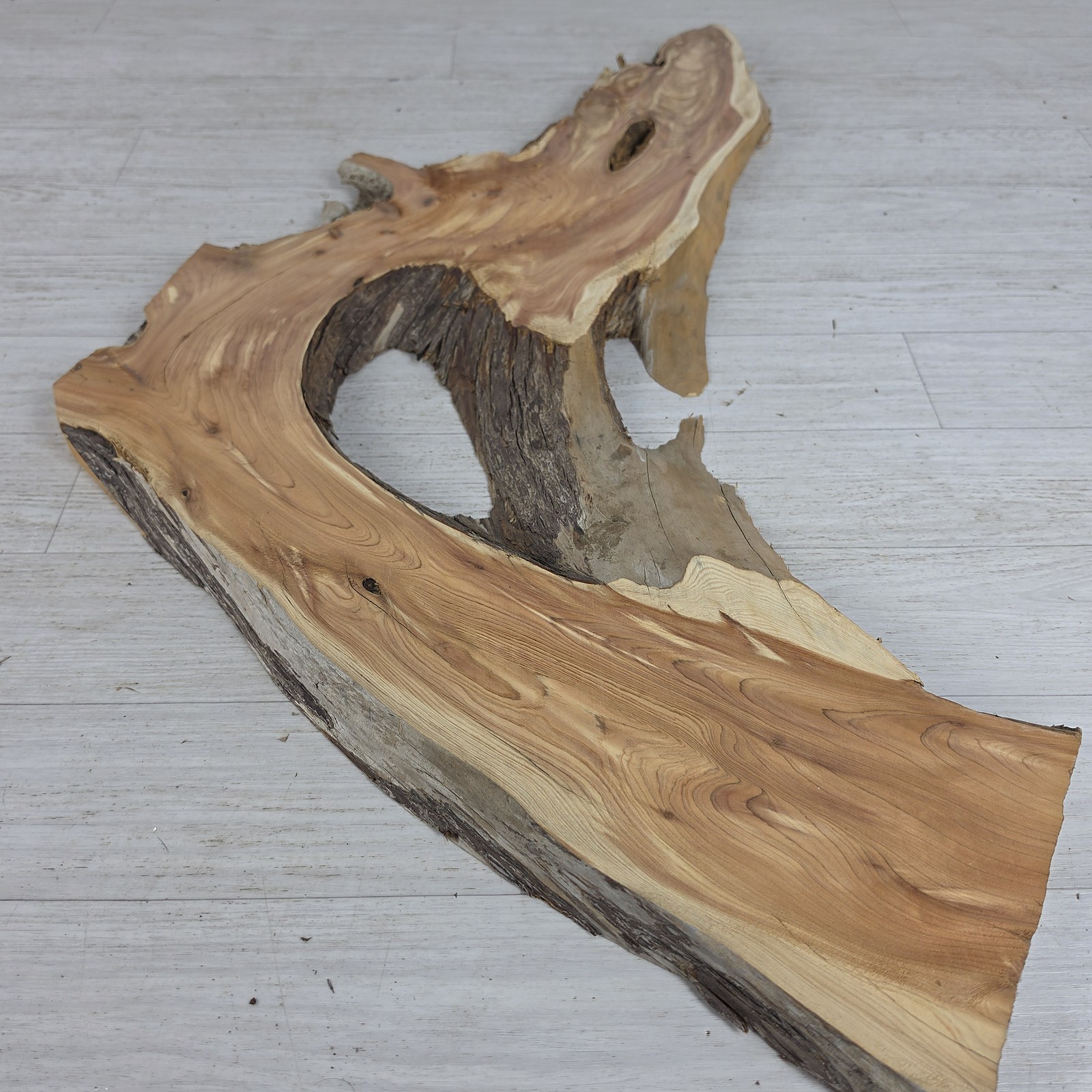
Should you cut it straight or preserve the tree’s shape?
Boards broadly fall into two categories: rectangular boards cut straight on all four sides, and natural-edge boards that preserve the tree’s outer shape. Rectangular boards create a neat impression aligned with the wall, and they are convenient for hanging several shelves at the same height. With natural-edge boards, the curves of the edge become decoration in their own right.
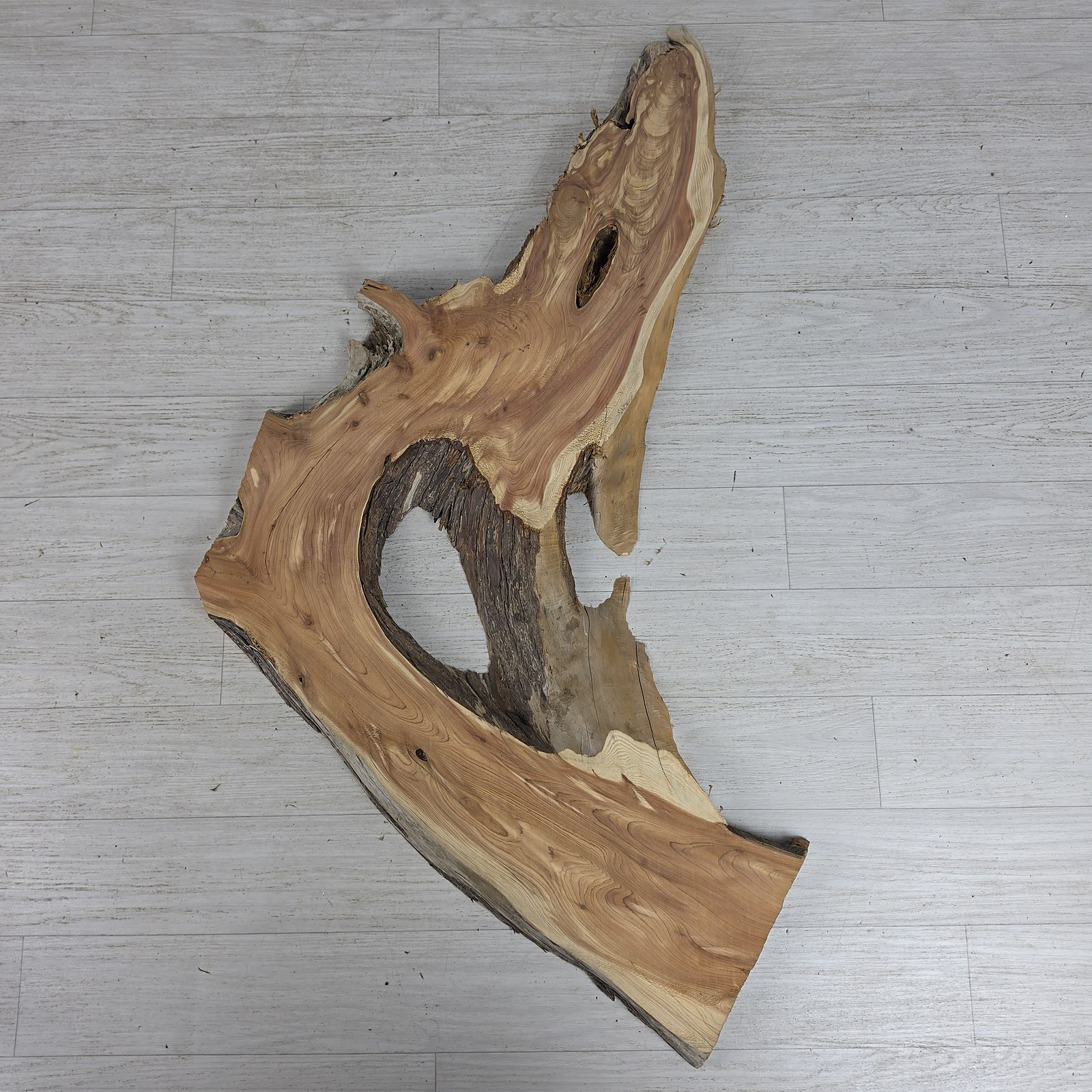
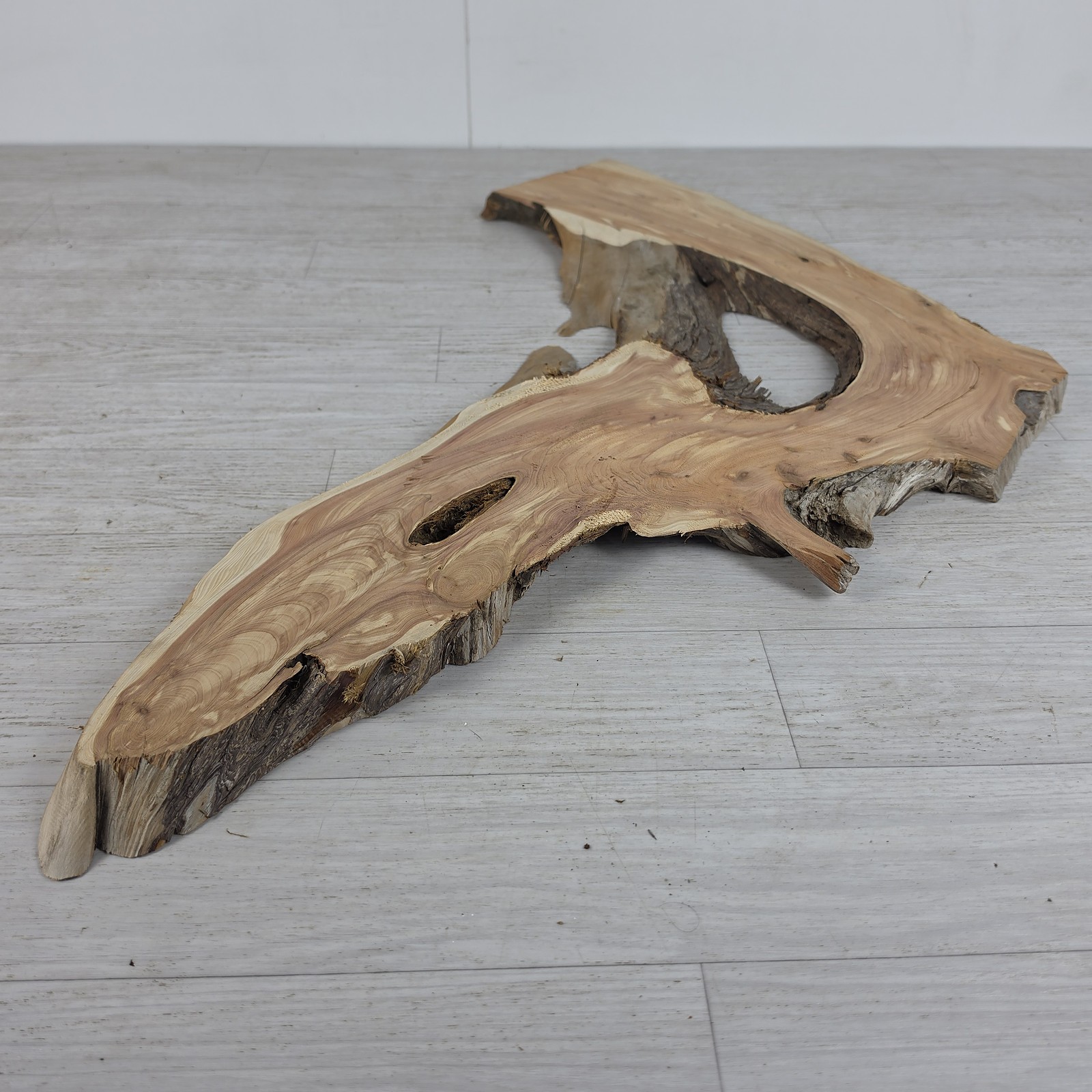
Among natural-edge boards, some are closer to wall-mounted sculptures than to shelves for holding objects. This juniper board, with its branching point and hole left intact, is one such example. With a board like this, you decide where to place it on the wall before deciding what to put on it.
Length is determined by the wall; width by the objects
The length is determined by the width of the wall where the shelf will hang. Width—in other words, the depth extending out from the wall—is determined by the objects you plan to place on it. A hand’s breadth may be enough for a few small potted plants or picture frames, while standing books requires more room. Measuring the installation spot and the objects first makes choosing a board easier.
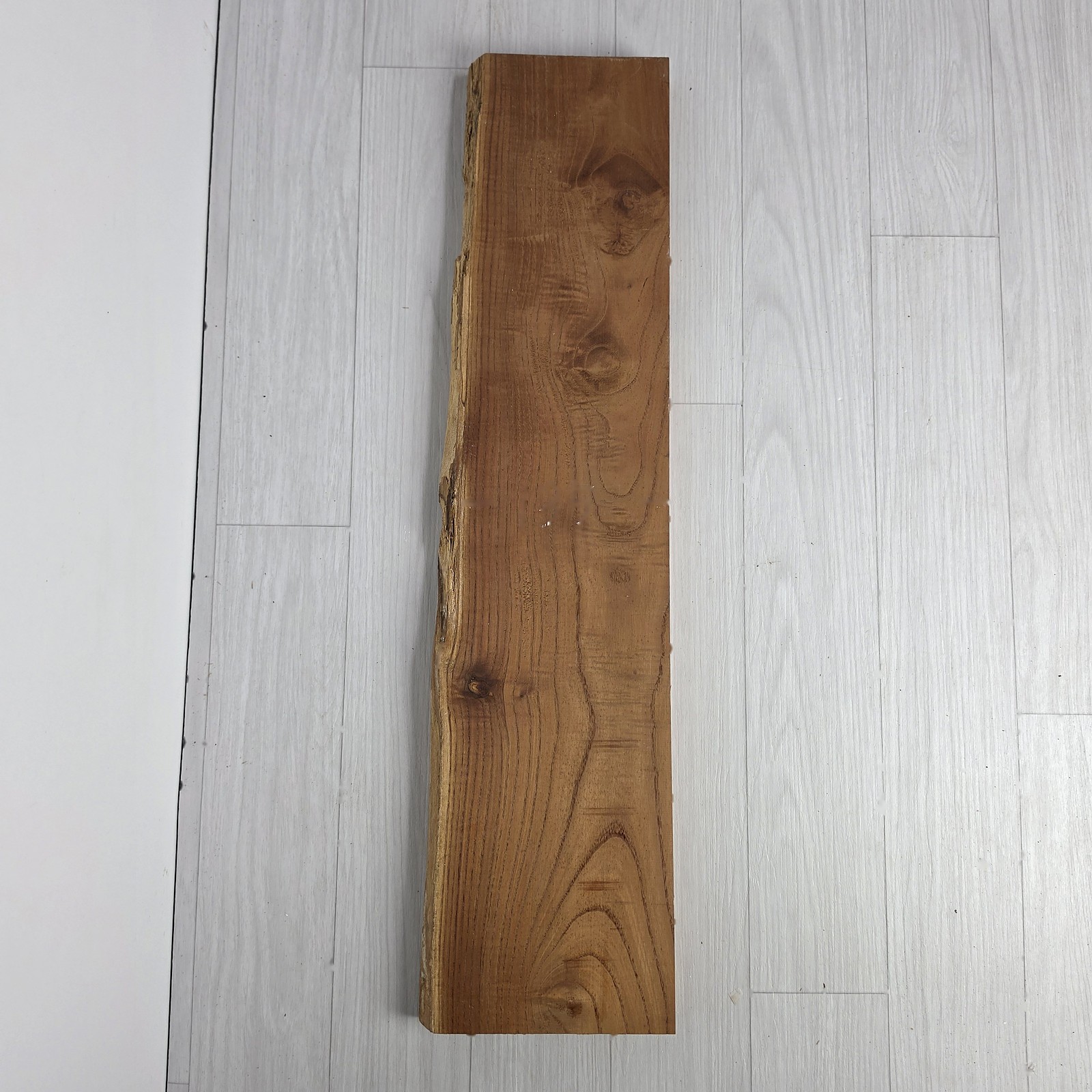
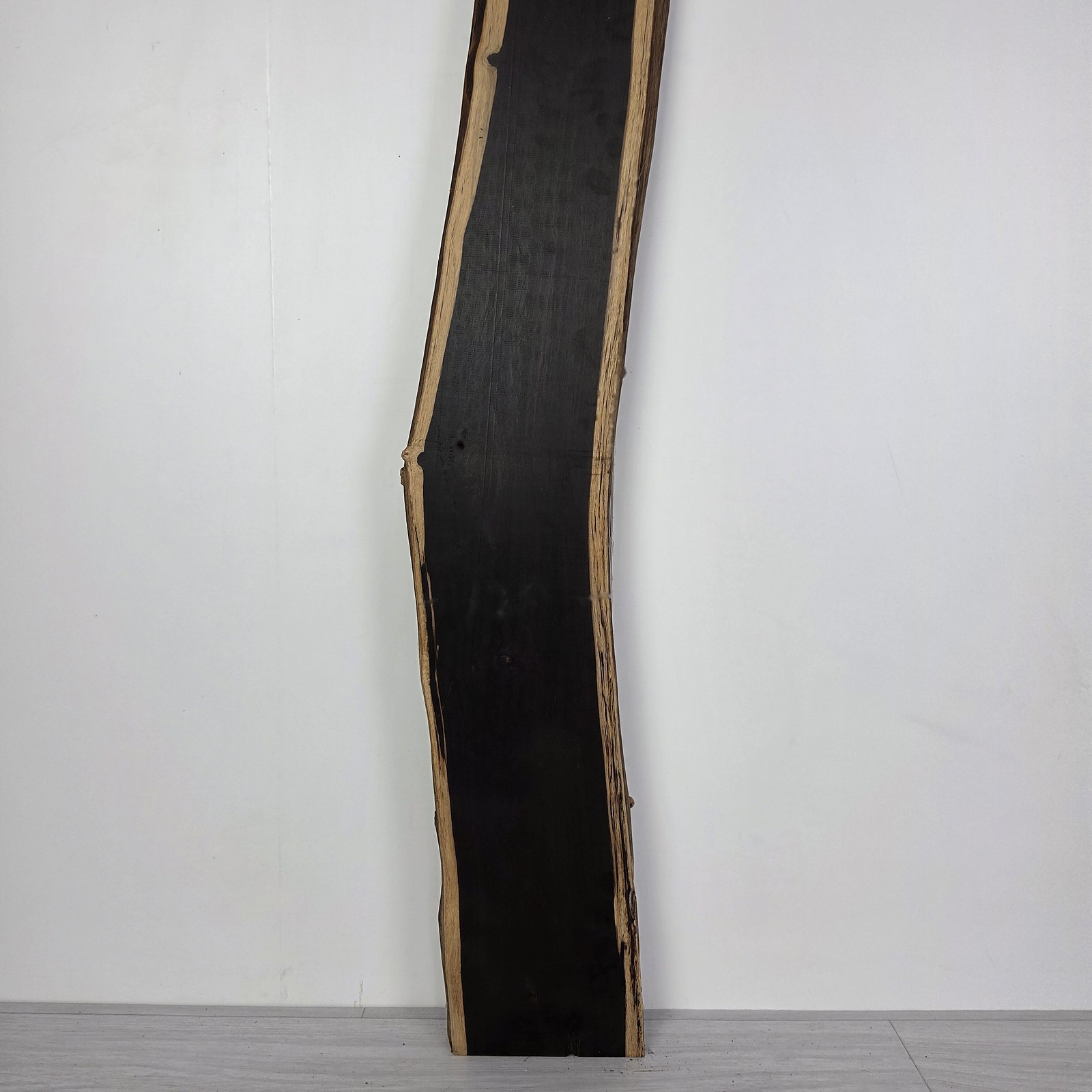
Even when they are both called “shelves,” a board’s proportions change how it is used. The 640 mm Toona board suits a wall shelf for small decorative objects or a signboard for engraving a name. The narrow, elongated mpingo board, measuring 1,220 mm long, becomes a long shelf hung in a single line along a long wall. Its light-colored edge surrounds the black heartwood, making it look like a single line drawn across the wall when hung.
If you plan to use concealed hardware, consider the thickness
A shelf that appears to project from the wall as nothing but a board, without visible brackets, is called a floating shelf. Holes are drilled into the back of the board, and hardware fixed to the wall is inserted into them. Because the hardware must fit inside the board, a board with ample thickness is easier to work with. A thick board also presents a substantial cross-section when viewed from the front after it is mounted on the wall.
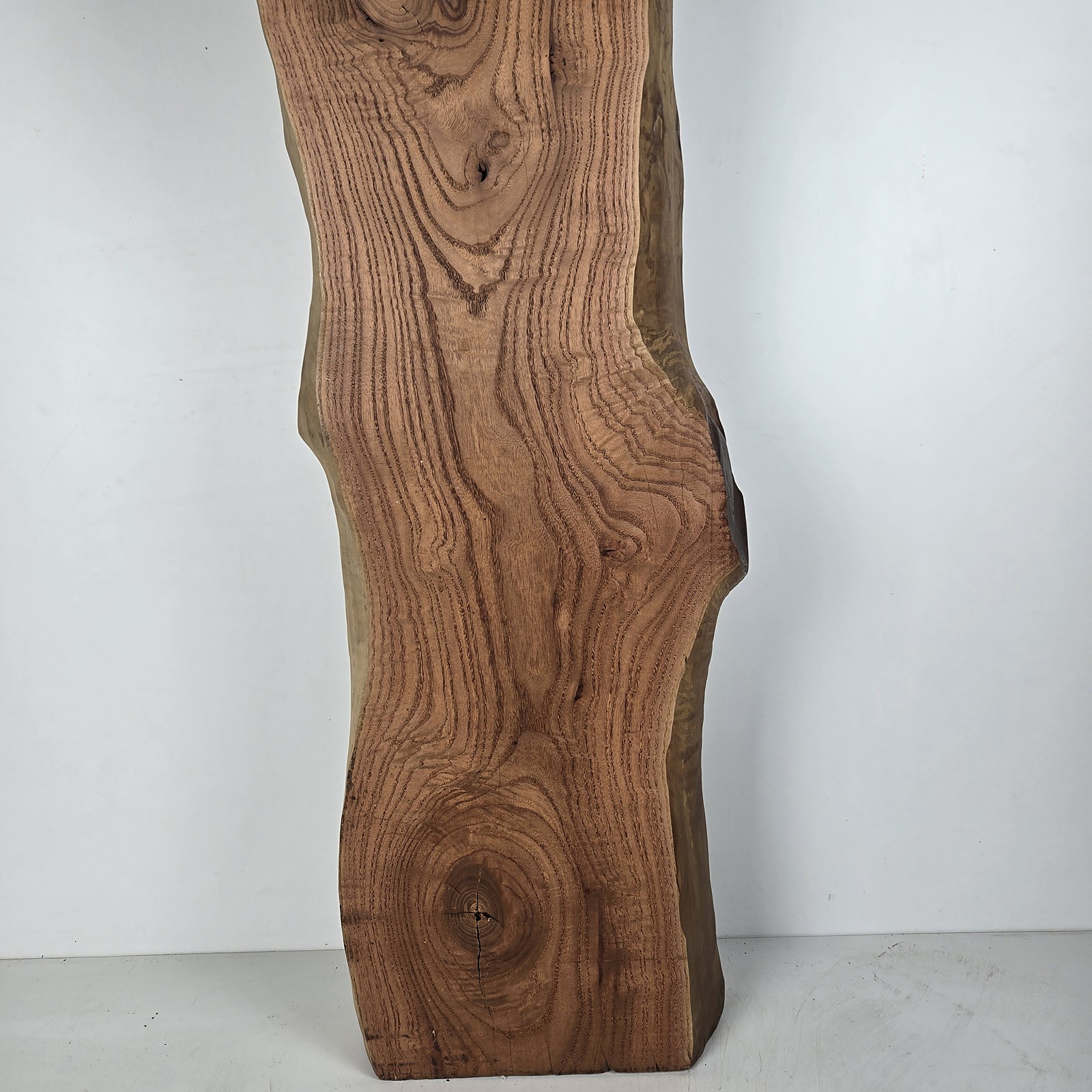
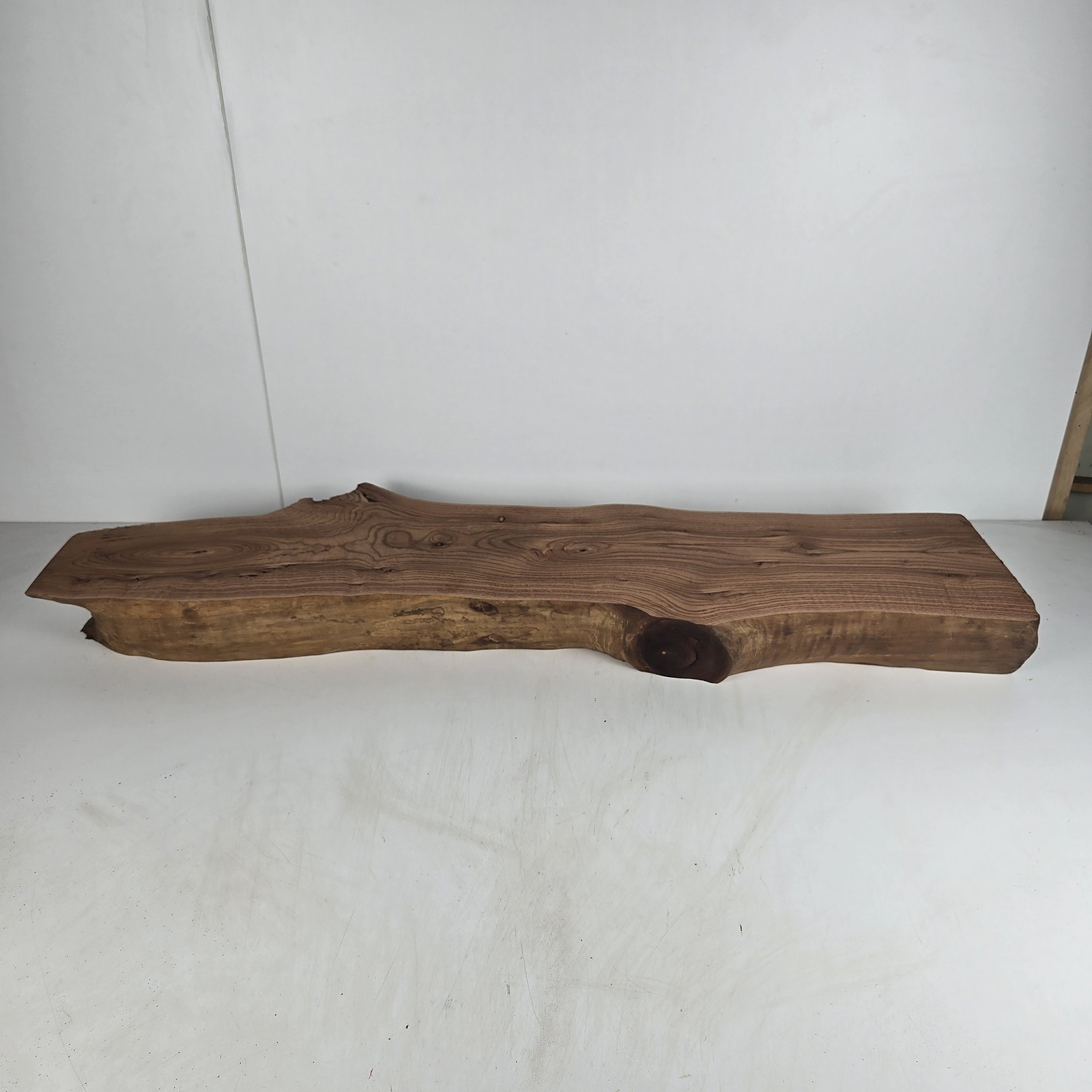
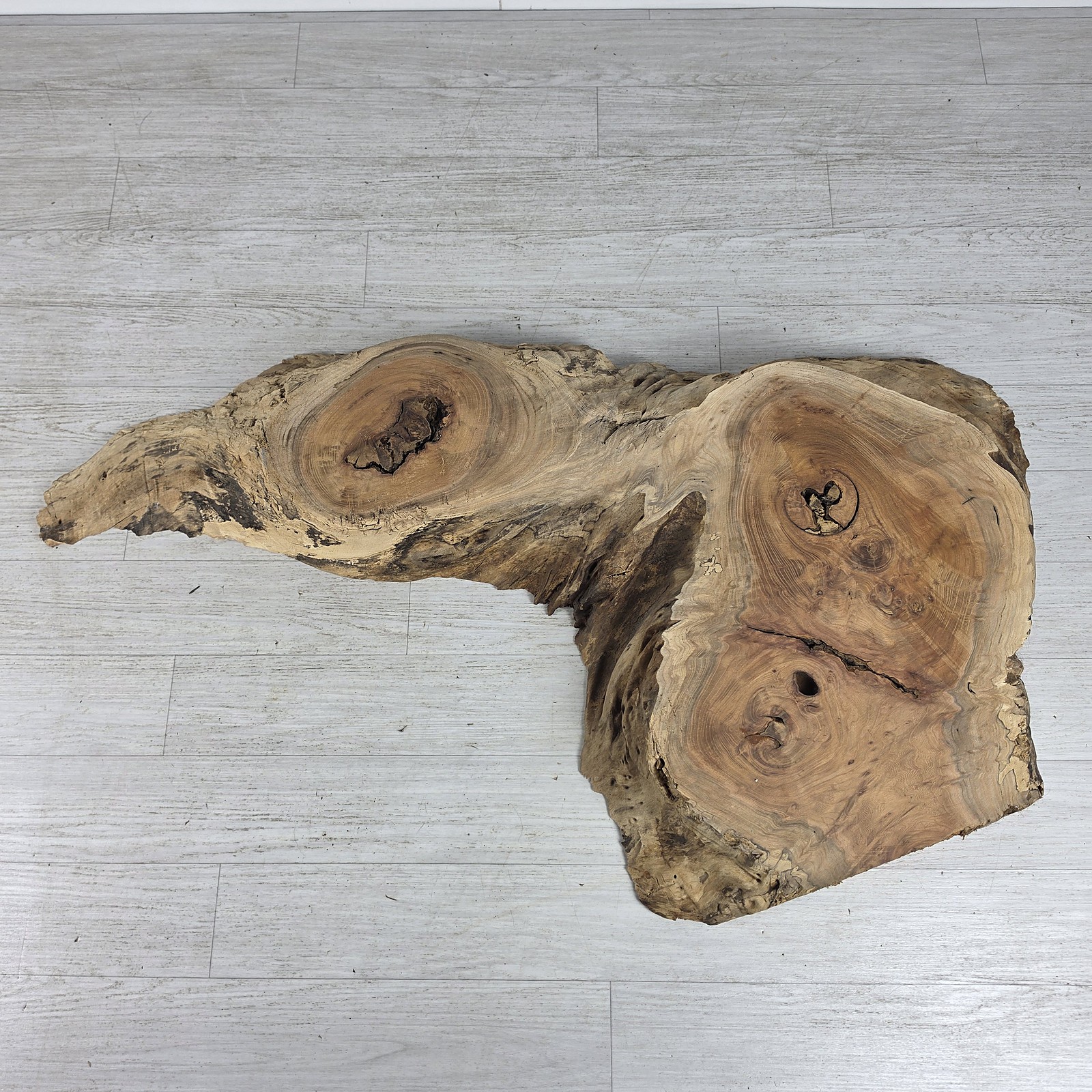
Choosing a wall shelf ultimately means asking four questions in order. Should the edge be straight, or should the tree’s shape remain? Is the length right for the place where it will hang? Does the width support the objects you plan to place on it? If you are using concealed hardware, is the thickness sufficient? Once you have answered these questions, what remains is the final choice: the color and grain—in other words, personal taste.
Every board shown in the photographs is a one-of-a-kind piece. You can continue reading about the distinct colors and grain patterns of each species in the magazine’s articles on wood species.