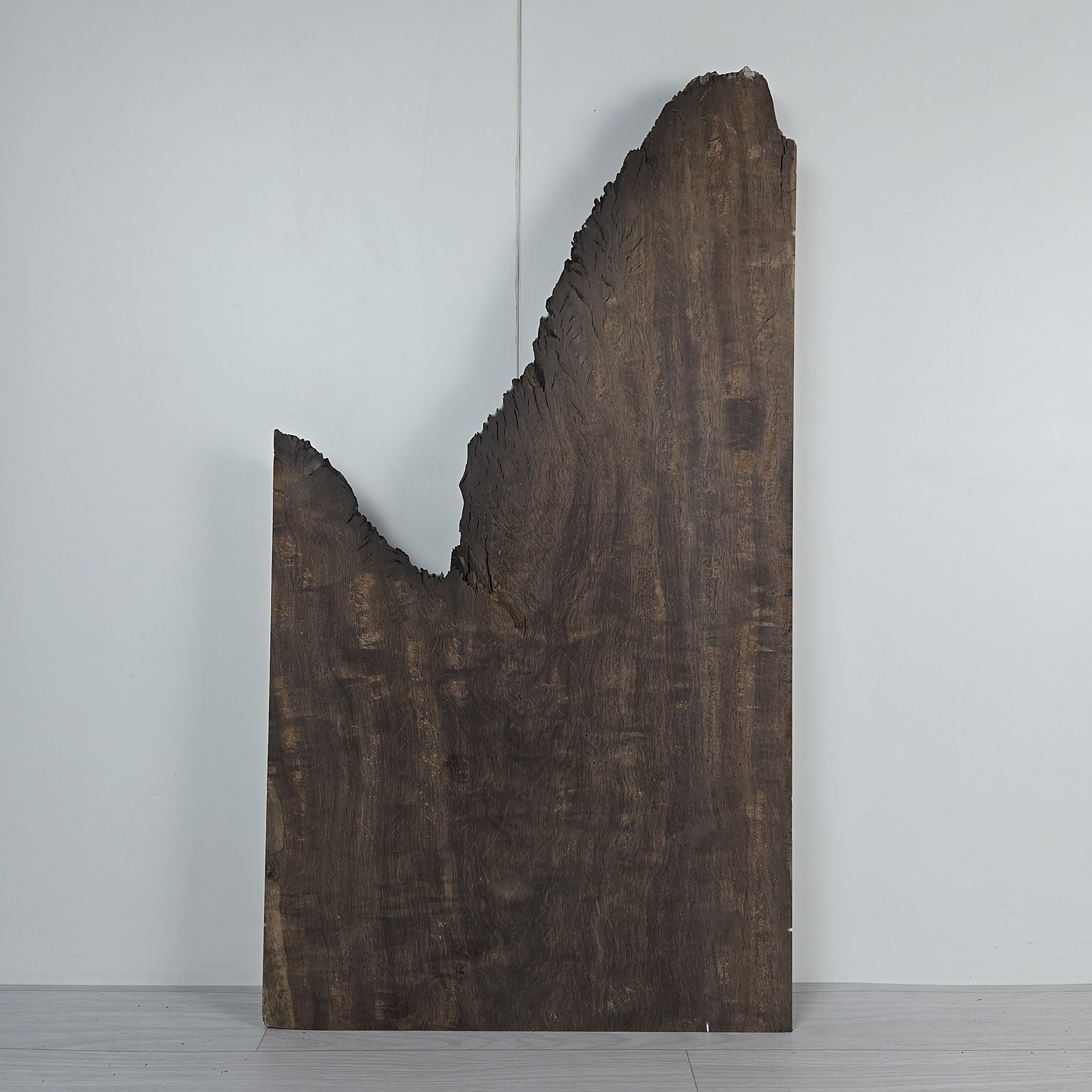
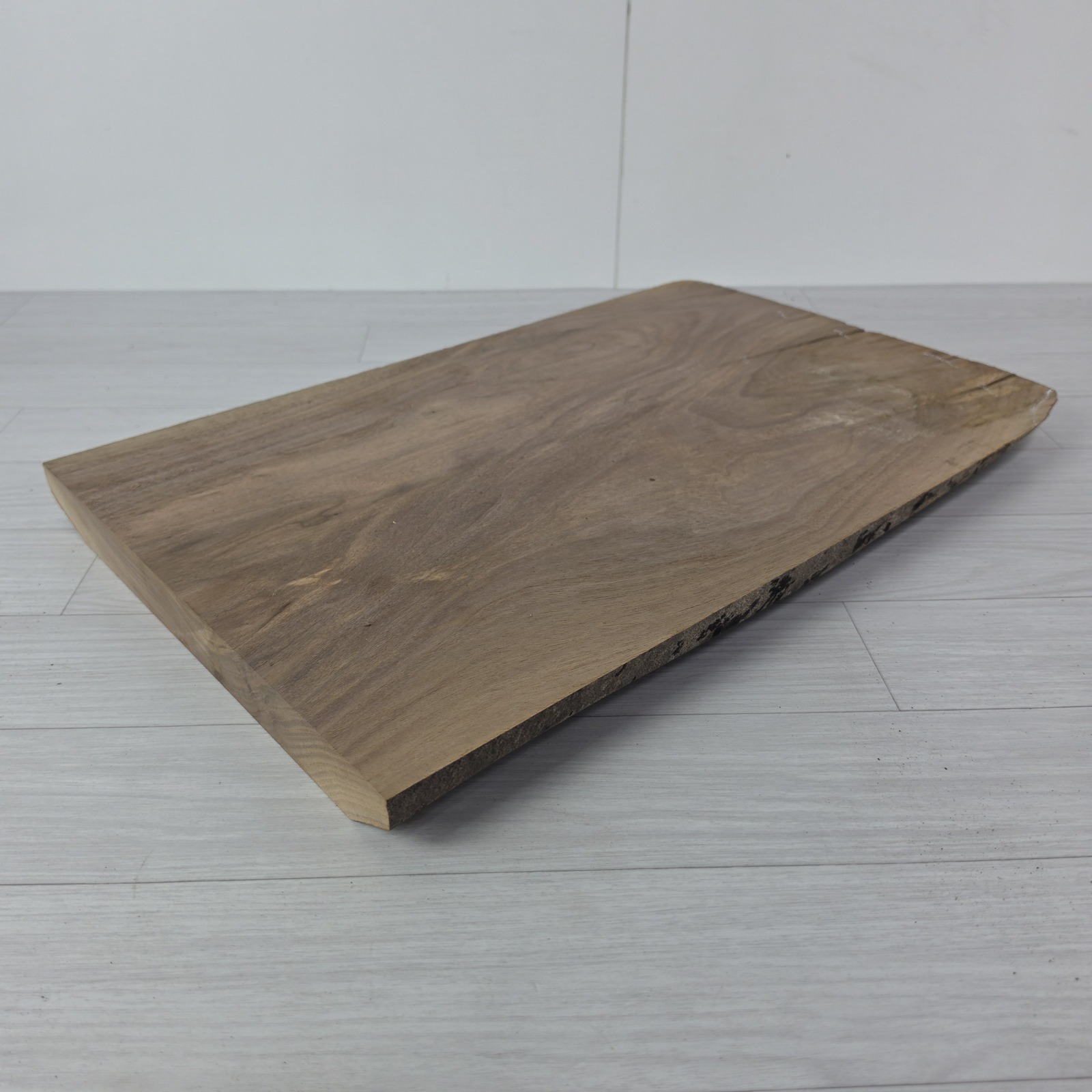
When people think of walnut, the first image that comes to mind is dark brown furniture. But when live-edge boards are laid out one by one, the color does not easily settle into a single shade. Even across the same brown surface, the lines may run straight before meeting a knot and curving around it. A light band may remain along the edge. Looking at walnut before it becomes furniture is much like dividing a familiar brown into several parts and reading each one.
The Brown Interior and the Light Outer Edge
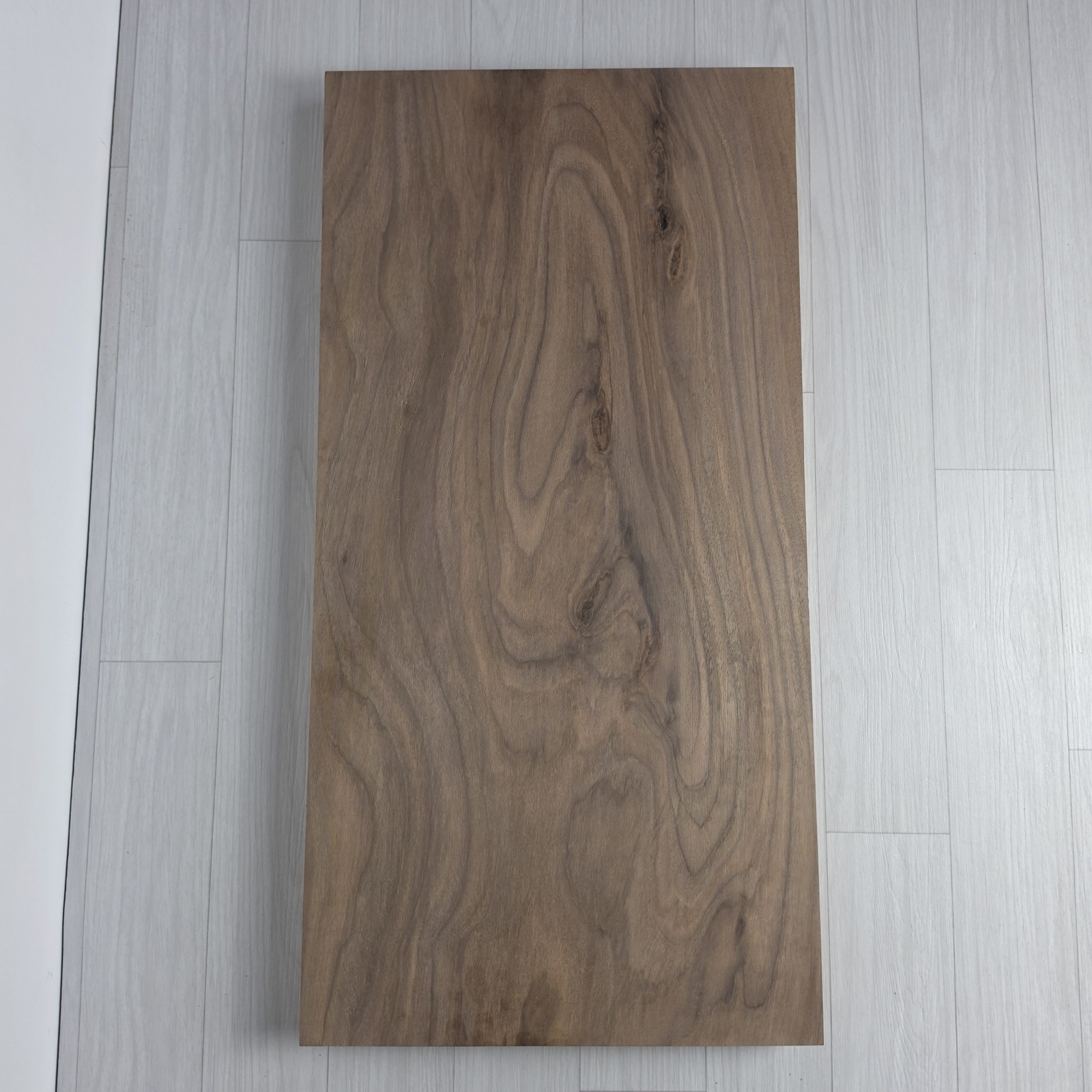
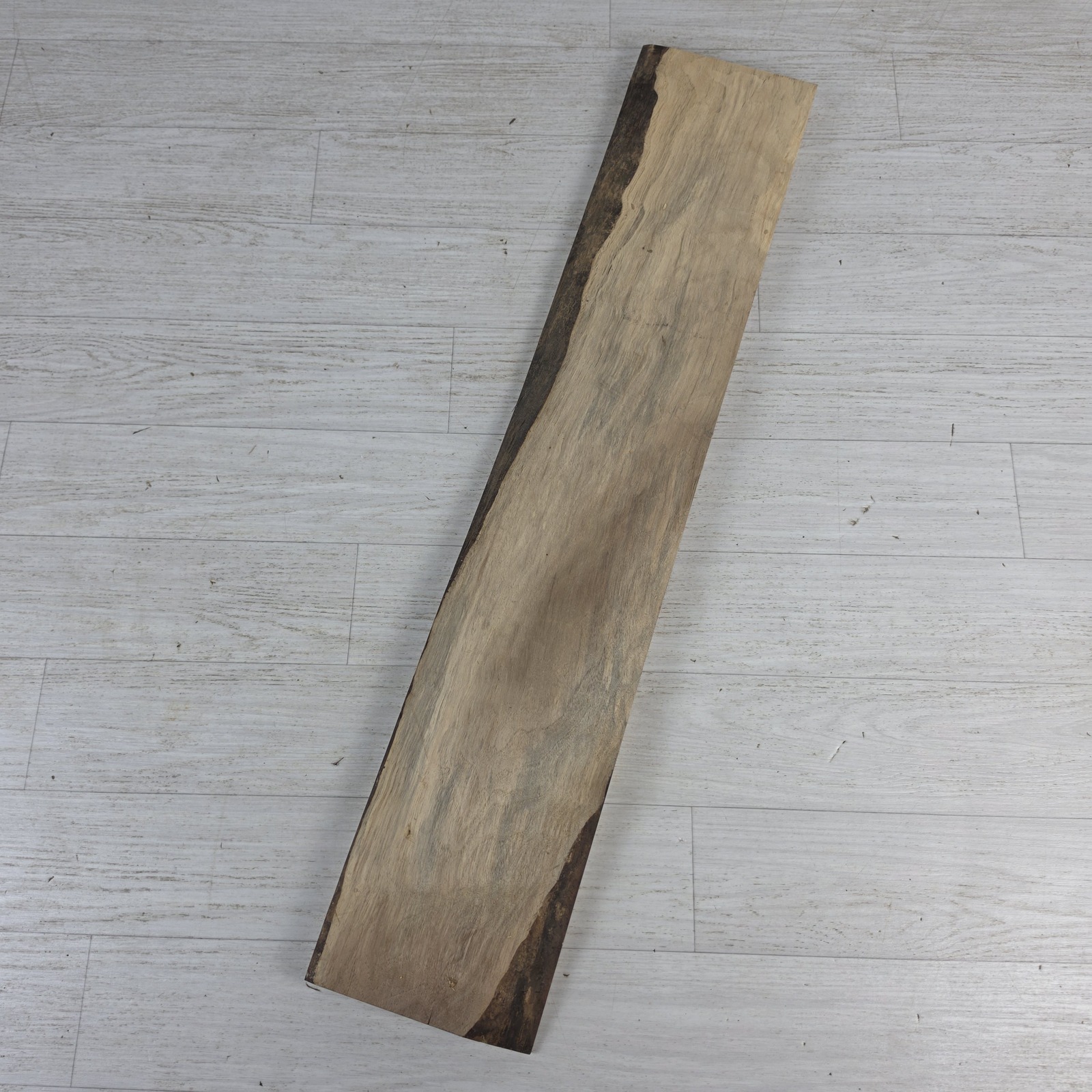
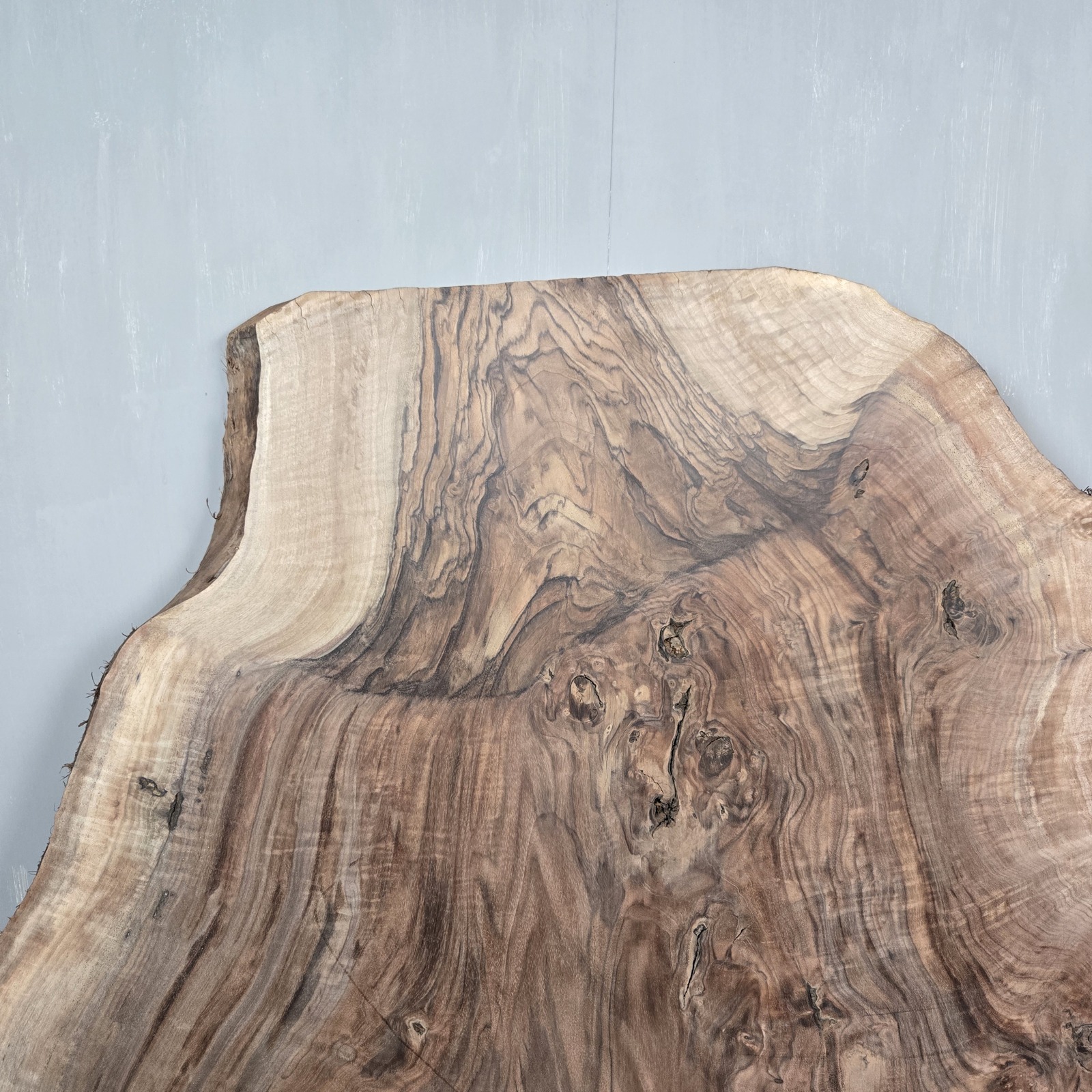
The heartwood of North American Black Walnut is brown, while its sapwood is closer to cream. Once you understand the difference between heartwood and sapwood, a light band becomes part of the material’s structure rather than a blemish to be erased. Whether to match everything to the darker surface or leave the lighter areas visible depends on the impression the finished piece is meant to make. The sapwood board in the photograph has a broad light surface running alongside a dark edge on one side.
The Name Claro Walnut
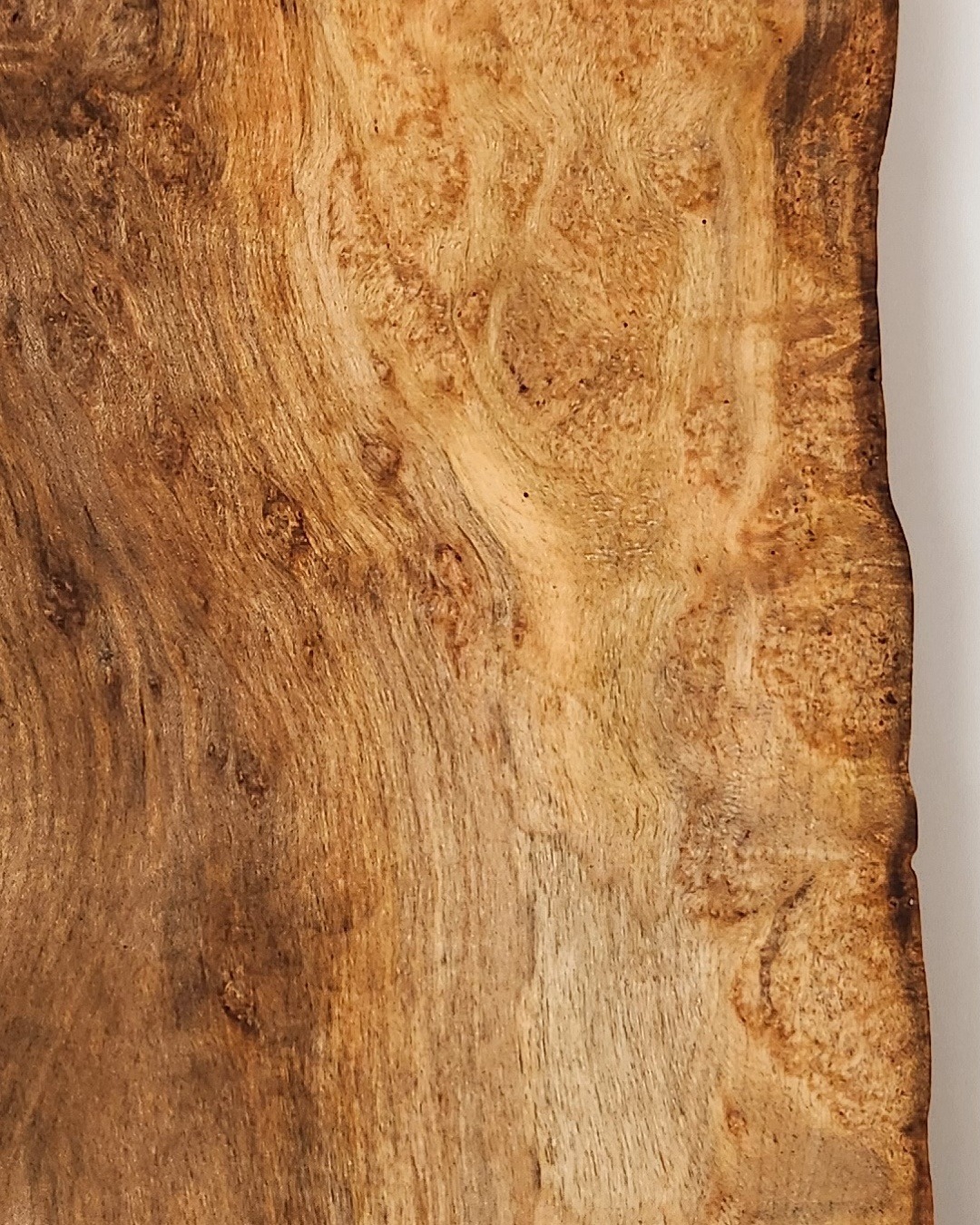
Claro Walnut is a name used to distinguish it from the tree commonly called North American Black Walnut. Claro Walnut also displays a range of grain patterns, and in material with burl figure, the lines can wind in especially complex ways. In the board shown here, dark lines ripple beneath a rounded pattern at the top. This appearance does not represent all Claro Walnut. It is more accurate to consider separately the description of a species and the figure of a single piece.
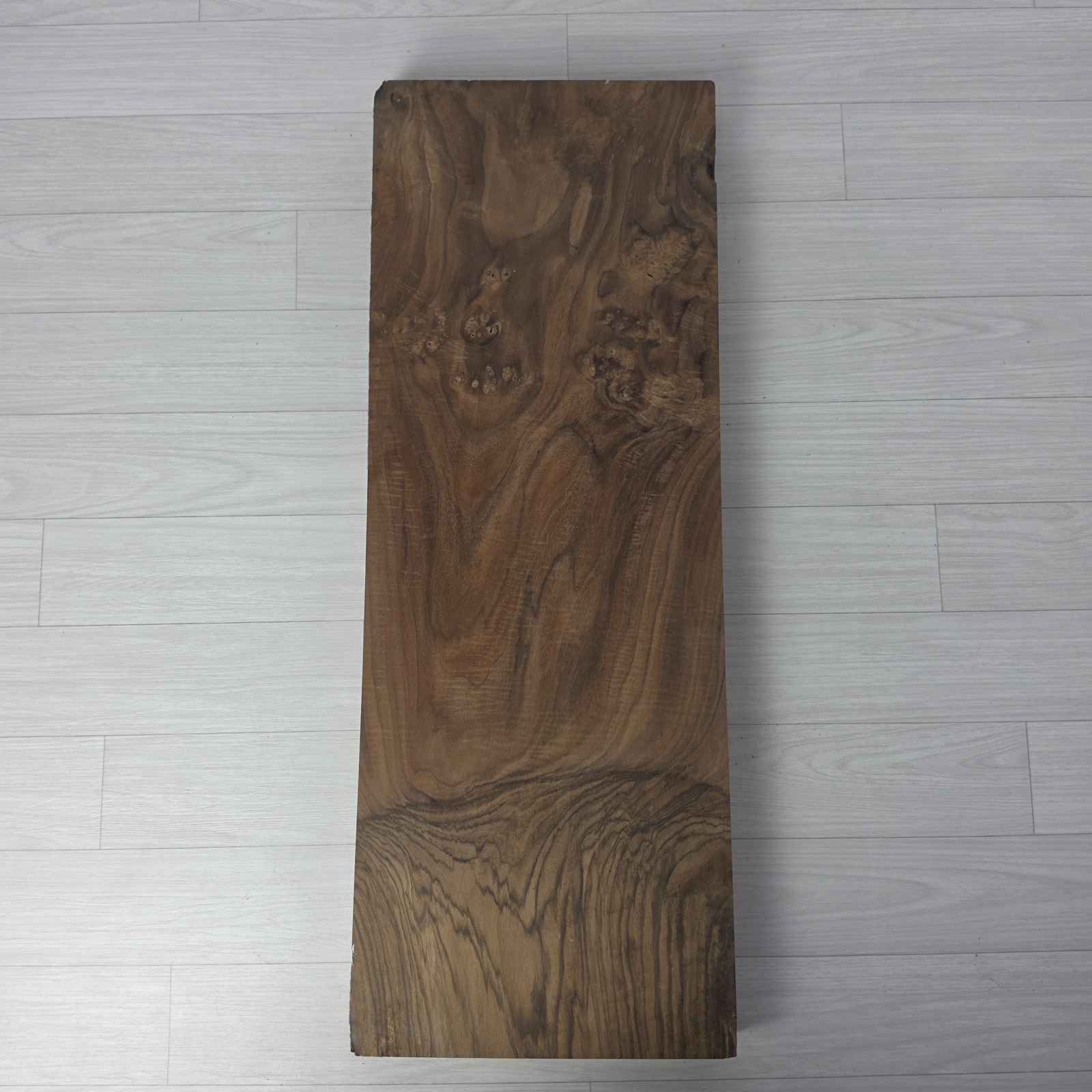
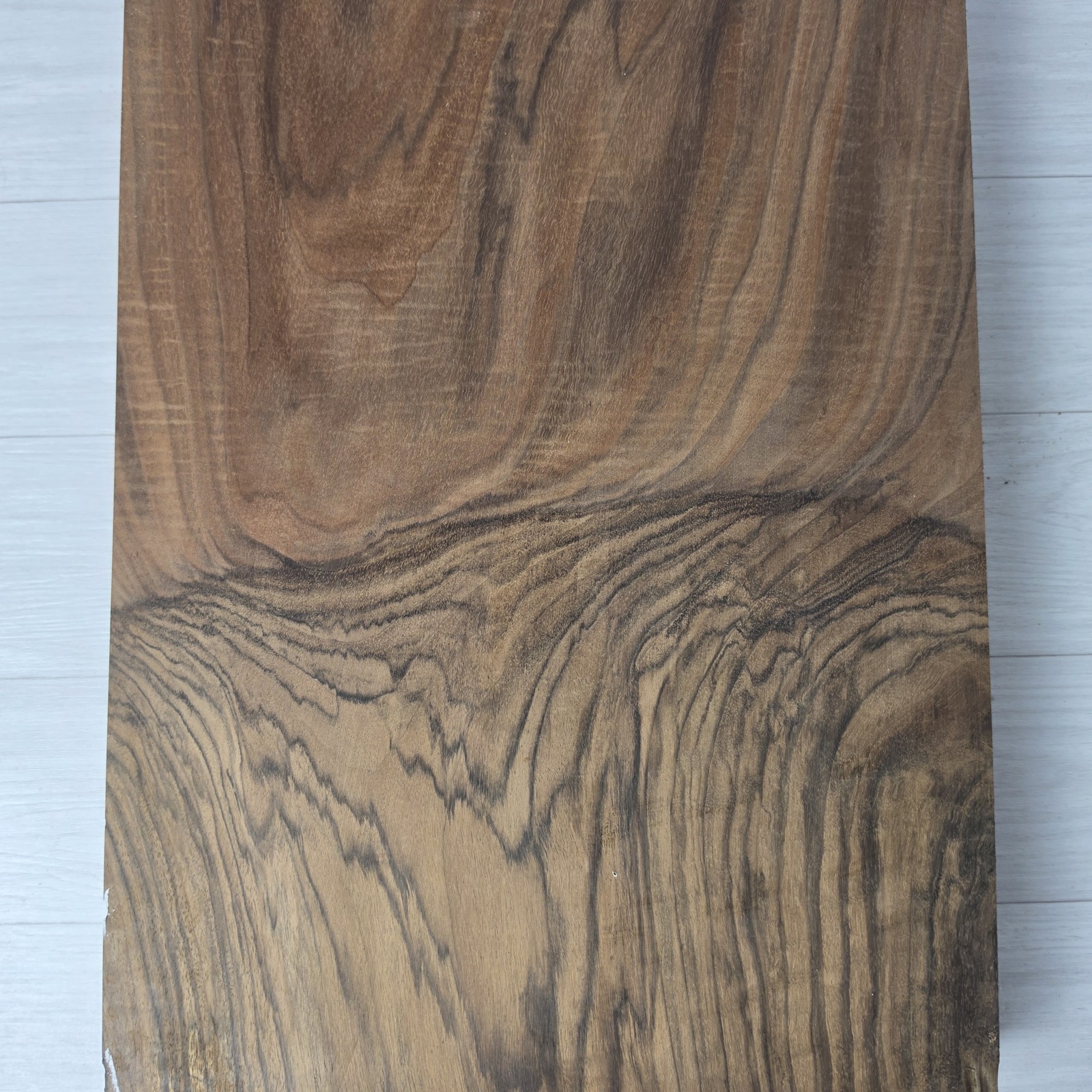
Look closely at the edge of a broad live-edge piece and light borders meet dark lines. Cracks also remain beside the knots. Choosing the figure and determining the usable area take place together. Even after finding a beautiful section, you need to identify separately where to cut, what to avoid, and which surfaces will be visible after completion.
What to Look at After the Broad Surface
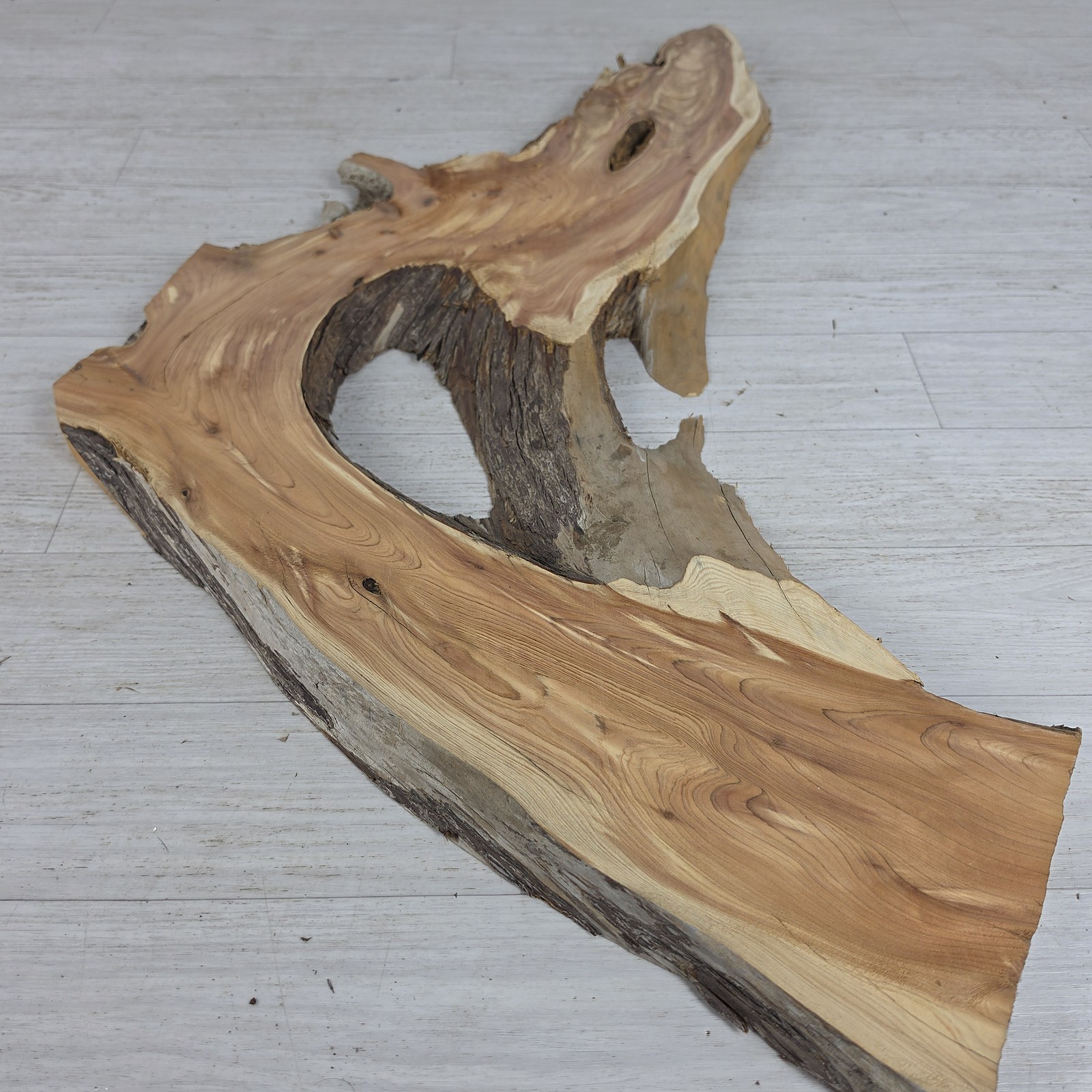
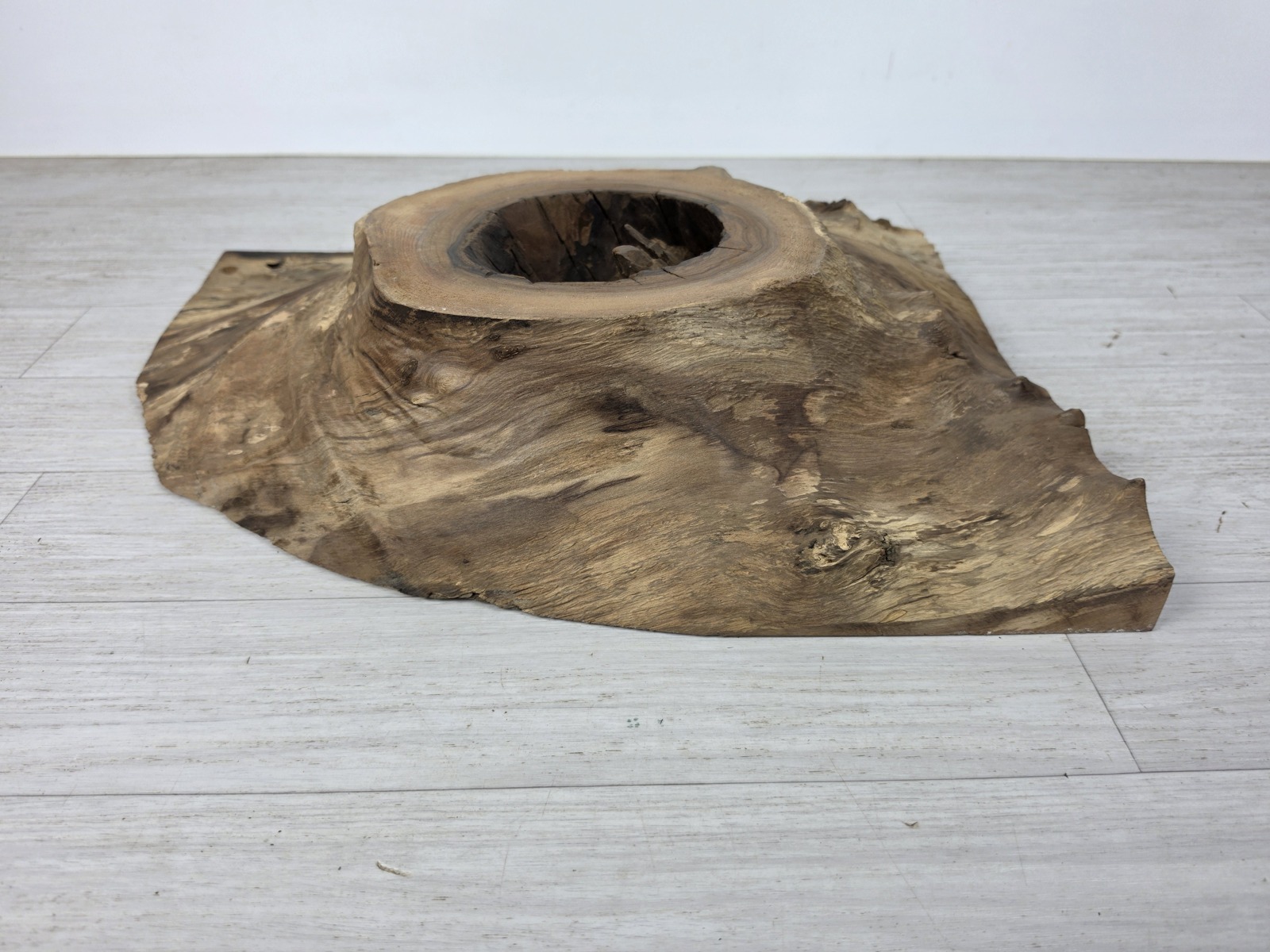
Walnut does not come only as rectangular boards. There are also pieces with an opening in the center and blocks with thick sides. You can make an object that preserves the opening, or avoid it to obtain smaller components. The material cannot make that choice for you. Once you determine the required width and length and then check the thickness and condition of the ends, the first impression that you like the figure can develop into a concrete plan.
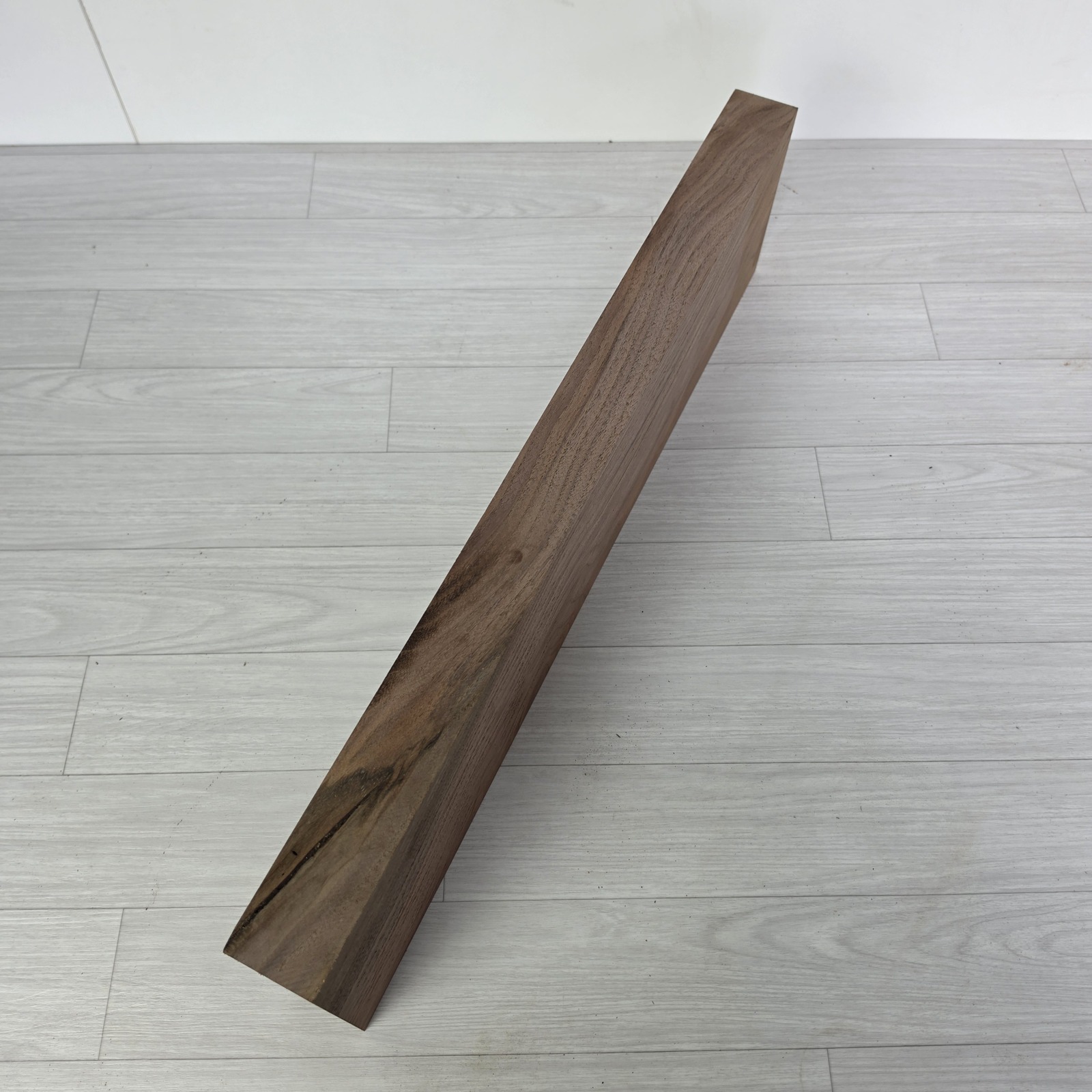
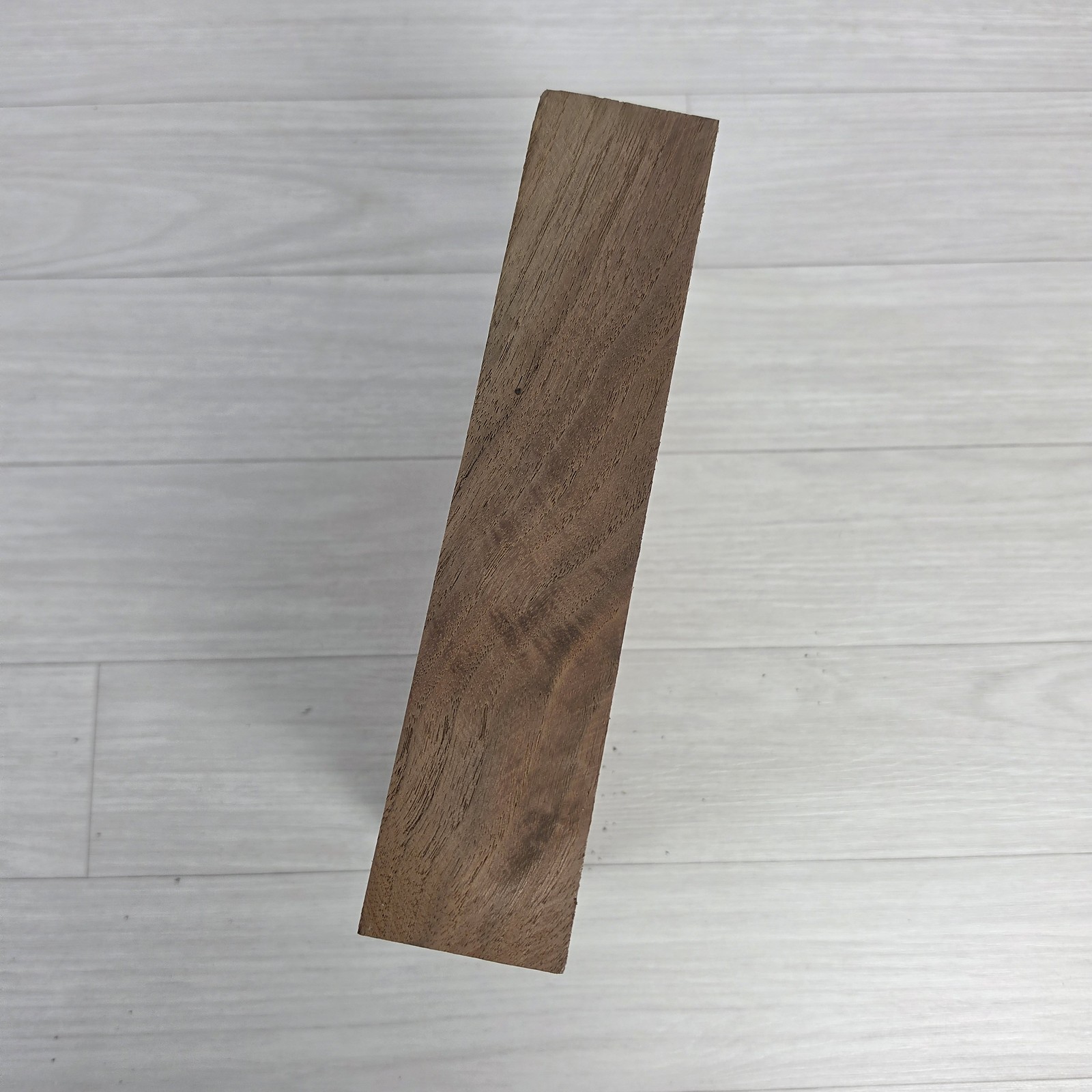
Even on their sides, small rectangular pieces show grain running diagonally. That is why a material cannot be fully understood from the front of a single photograph. Examine the front and back surfaces, the edges, and the end grain in sequence, imagining which areas you want to keep. Seen this way, walnut’s brown moves beyond being a simple color name. It becomes the language of the material: deciding whether to preserve straight lines or winding ones, and where to place the light edge.
 Black Walnut
IN STOCK
Black Walnut in stock
Check each product page for dimensions and condition. Contact us to confirm international shipping and preparation.
All photographs show actual solid wood from Woodway. Species names follow the product names, and because each piece is unique, the material may already have been sold. The color description references AHEC walnut materials; the name and figure of Claro Walnut reference The Wood Database.